The modern educational landscape is evolving at a breakneck pace. However, as curricula become more rigorous, a concerning phenomenon has emerged: the “learning gap.” This gap represents the disparity between what students are expected to learn and what they actually comprehend. According to the National Assessment of Educational Progress (NAEP), recent years have shown a significant decline in mathematics and reading proficiency across various demographics in the United States.
Closing this gap requires more than just classroom instruction; it demands a holistic approach that combines personalized guidance with practical academic support. By integrating professional mentorship with targeted homework assistance, students can transition from passive learners to masters of their subjects.
The Anatomy of the Learning Gap
The learning gap isn’t just about grades; it’s about the erosion of foundational knowledge. When a student fails to grasp a core concept in algebra or chemistry, every subsequent lesson becomes a struggle. Factors contributing to this include:
- Overcrowded Classrooms: Teachers often lack the bandwidth to provide one-on-one attention.
- Resource Disparity: Access to high-quality study materials varies significantly across school districts.
- The “Summer Slide”: The loss of academic skills during long breaks.
To combat these challenges, many students are turning to external resources. For instance, when the complexity of modern coursework becomes overwhelming, seeking specialized do my homework services allows students to see high-quality examples of solved problems, which serves as a practical blueprint for their own learning process.
The Power of Professional Mentorship
Mentorship goes beyond tutoring. While a tutor helps you solve a specific problem, a mentor helps you develop the mindset to solve any problem. Professional mentors provide the “soft skills” that are often missing from traditional textbooks—critical thinking, time management, and academic resilience.
Cognitive Development and Confidence
A study by the Journal of Evidence-Based Psychotherapies suggests that mentored students show higher levels of academic self-efficacy. When a professional guides a student through a difficult project, they aren’t just giving answers; they are modeling the thought process required to reach those answers. This builds a “growth mindset,” where students view challenges as opportunities rather than roadblocks.
How Homework Assistance Acts as a Catalyst
Homework is often viewed as a chore, but its pedagogical purpose is “retrieval practice”—the act of recalling information to strengthen long-term memory. However, if a student is practicing the wrong methods, they are essentially “learning to fail.”
Professional assignment writing help bridges this divide by providing immediate, accurate feedback. Instead of spending six hours frustrated by a single calculus theorem, a student can access expert guidance that clarifies the concept in minutes. This efficiency prevents burnout and ensures that the student remains on track with the rest of the class.
Data Insight: The Impact of Supplemental Support
- 74% of students who utilize supplemental academic services report an improvement in their overall GPA.
- 82% of educators agree that personalized academic assistance reduces student anxiety levels before major exams.
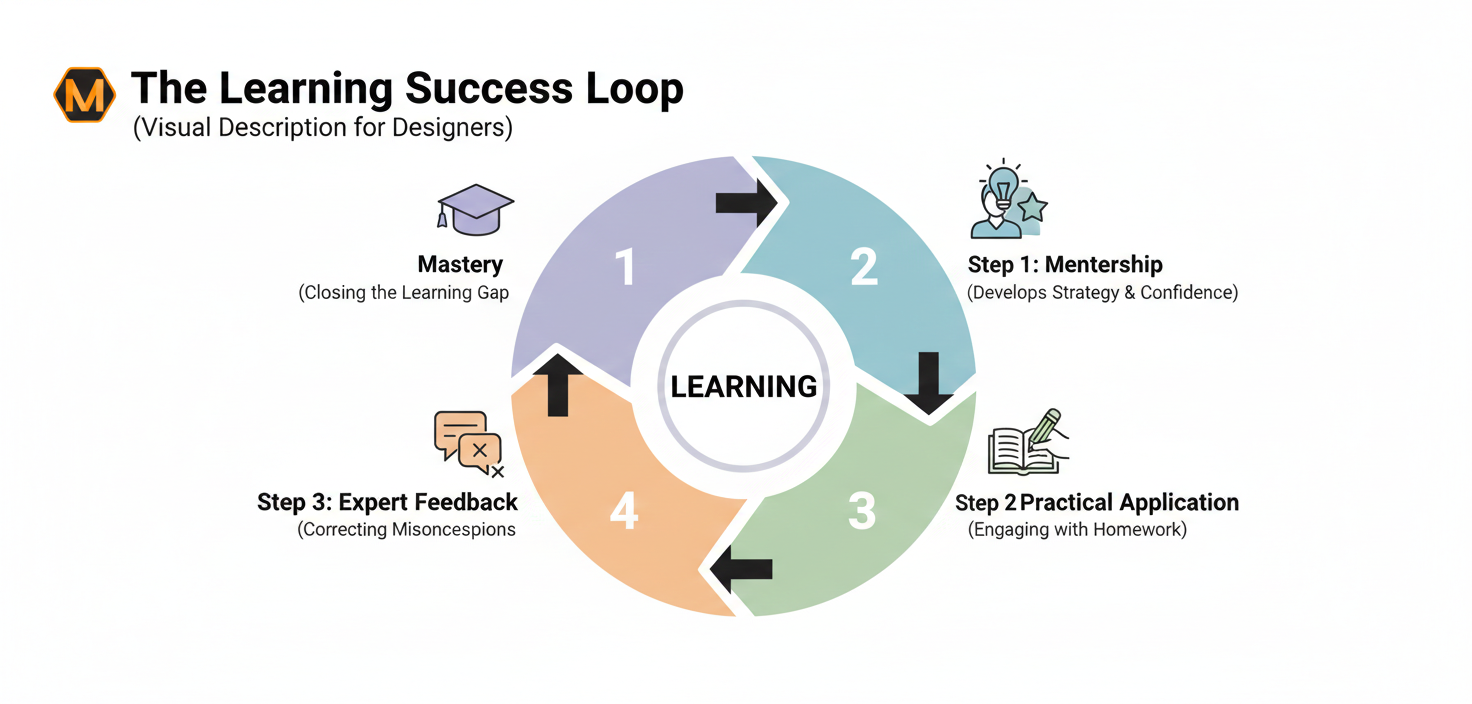
Bridging the Gap: A Multi-Tiered Approach
To truly bridge the learning gap, the integration of mentorship and homework help must be seamless. Here is how this dual approach transforms the educational experience:
1. Tailored Instruction
Every student has a unique “learning style”—whether visual, auditory, or kinesthetic. Professional mentors can identify these styles and tailor homework assistance to match. For example, a visual learner might receive help through infographics and diagrams, while an analytical learner might benefit from step-by-step logic chains.
2. Filling the Foundational Voids
Often, a student struggles with 10th-grade physics because they missed a 7th-grade math concept. Mentors use homework sessions as diagnostic tools to identify these “ghosts of education past” and fix them before moving forward.
3. Language and US-Based Standards
For students in the United States, adhering to Common Core or state-specific standards (like TEKS in Texas) is vital. Professional services ensure that the assistance provided aligns perfectly with the specific linguistic and academic nuances of the American curriculum.
Key Takeaways
- The Learning Gap is Cumulative: Small misunderstandings today lead to significant academic hurdles tomorrow.
- Mentorship Builds Resilience: Professional guidance fosters the emotional and cognitive tools needed for long-term success.
- Homework Help is Strategic: It provides the immediate clarity needed to keep pace with fast-moving curricula.
- Synergy is Key: Combining the “how” (mentorship) with the “what” (homework assistance) creates a robust foundation for mastery.
Conclusion
The journey toward academic excellence is rarely a straight line. It is a process of trial, error, and refinement. By leveraging professional mentorship and expert homework assistance, students are no longer left to navigate the complexities of modern education alone. These tools act as the scaffold that supports the student until they are ready to stand on their own, fully equipped to bridge any gap that stands in their way.
FAQ Section
Q: Is using homework assistance considered cheating?
: Not when used correctly. Think of it as a “supplemental textbook.” It provides solved examples and expert explanations that help you understand the process, allowing you to complete your own work with greater confidence.
Q: How does mentorship differ from standard tutoring?
A: Tutoring is task-oriented (helping with a specific test or paper). Mentorship is goal-oriented, focusing on the student’s long-term academic growth, study habits, and career aspirations.
Q: Can these services help with specific US-based curricula?
A: Yes. Professional platforms employ experts familiar with US standards, ensuring the language, formatting (APA, MLA, etc.), and grading rubrics match local expectations.
Author Bio: Sarah Jenkins
Senior Academic Consultant at MyAssignmentHelp Sarah Jenkins holds an M.Ed. from the University of Washington and has over 12 years of experience in curriculum development and student mentorship. At MyAssignmentHelp, Sarah focuses on creating personalized learning pathways that help students overcome academic anxiety. She is a firm believer that every student can excel if given the right tools and the right “nudge” at the right time.
References:
- National Center for Education Statistics (NCES) – NAEP Report Card.
- Dweck, C. S. (2006). Mindset: The New Psychology of Success.
- Journal of Educational Psychology – The Correlation between Homework Quality and Academic Achievement.