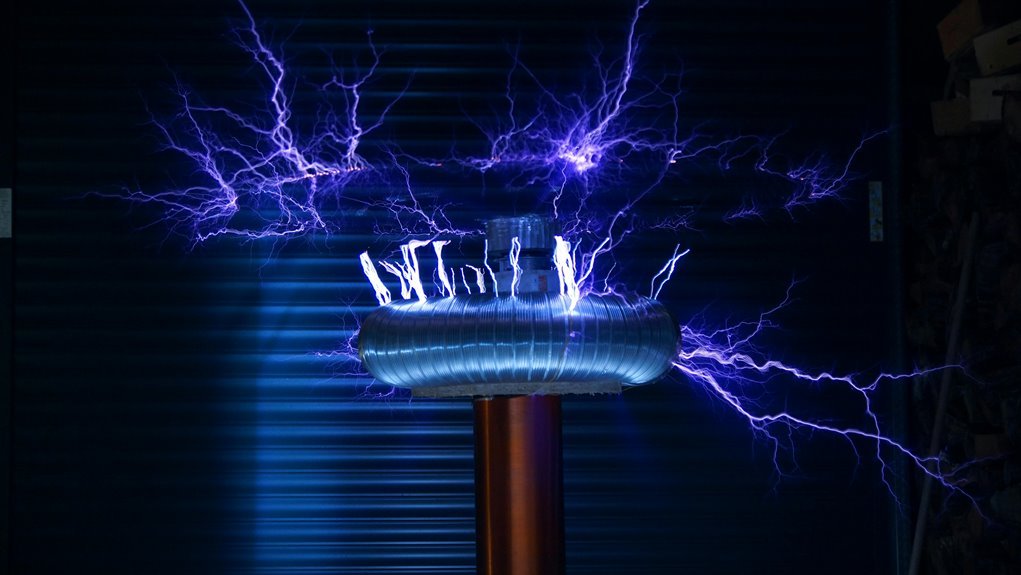
Titan Arc 662903270 Dynamics offers a unified framework for curvature, tension, and energy transfer, with careful handling of discontinuities and modular design. Stability arises from the interplay of geometry, energetics, and control-system interactions across scales. Thermal management enhances active range and efficiency, aided by cooling and levitation to reduce fluctuations. The approach suits a spectrum of deployments, but its trade-offs and lifecycle implications invite further scrutiny, inviting ongoing evaluation of materials, integration, and cost.
Titan Arc 662903270 Dynamics Redefines Arc Behavior
Titan Arc 662903270 Dynamics redefines arc behavior by introducing a unified framework that models curvature, tension, and energy transfer with precise discontinuities handled through a robust mathematical foundation. The approach emphasizes modularity, rigorous validation, and transparent assumptions, enabling practitioners to assess titan arc performance and dynamics stability. This framework supports scalable analysis while maintaining accessible, freedom-oriented clarity for researchers and engineers.
What Controls Stability in Titan Arc 662903270 Dynamics?
Stability in Titan Arc 662903270 Dynamics is governed by a balance of geometric, energetic, and control-system factors that interact across scales.
The framework emphasizes nitrogen cooling to suppress thermal fluctuations and extend active range, while magnetic levitation reduces mechanical contact losses.
Together, these elements constrain perturbations, enabling predictable responses and disciplined performance within intended operational envelopes.
From Thermal Management to Efficiency: Practical Impacts
The practical gains from thermal management in Titan Arc 662903270 Dynamics extend beyond cooling comfort to measurable efficiency improvements: by suppressing thermal fluctuations, the system maintains steady state conditions, reduces parasitic power losses, and enables tighter control tolerances.
Thermal performance informs cooling strategies, energy efficiency, system integration, materials compatibility, thermal runaway prevention, heat transfer optimization, power density, component reliability, and thermal modeling.
Real-World Applications and Trade-Offs in Titan Arc 662903270 Dynamics
Real-world deployments of Titan Arc 662903270 Dynamics reveal a balance between performance gains and operational compromises, with applications ranging from compact consumer electronics cooling to industrial power electronics housing.
Real world applications highlight scalable thermal management, while trade offs in titan include complexity, cost, and reliability concerns, arc 662903270 dynamics guiding material choices, integration, and lifecycle planning for varied environments.
Conclusion
Titan Arc 662903270 Dynamics presents a cohesive framework where curvature, tension, and energy transfer harmonize across scales. Stability emerges from interconnected geometric, energetic, and control-system interactions, while nitrogen cooling and magnetic levitation suppress fluctuations and mitigate contact losses. Thermal management expands active range and efficiency, enabling tight tolerances without thermal runaway. Real-world deployments reveal nuanced trade-offs between complexity and cost. Coincident design cues—material choices, integration steps, and lifecycle planning—align to unlock reliable, scalable arc behavior across consumer to industrial applications.