
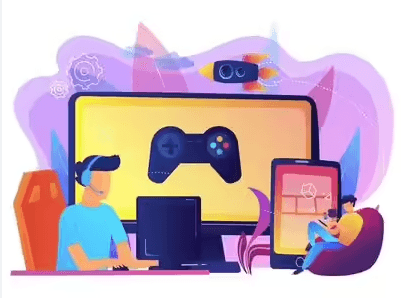
Cross-platform gaming has fundamentally changed how people interact with digital entertainment. A player on a console can now compete against someone on a PC, and mobile users can join the same session without friction. This shift required years of infrastructure development, software engineering, and a shift in attitudes among publishers and platform holders alike.
The same wave of connectivity has reshaped online casino gaming. Players no longer need a dedicated device or a specific operating system to access their preferred casino titles. They can visit casino spil platforms directly through a browser or app, on any device they happen to be using, phone, tablet, or desktop. The barriers that once separated casino gaming from the wider digital world have largely disappeared, a direct result of the cross-platform infrastructure now powering the industry.
What Cross-Platform Gaming Actually Means
Cross-platform gaming refers to the ability to play a game across different hardware systems without losing progress, performance, or access to other players. It sounds simple in theory, but achieving it requires significant alignment between developers, platform operators, and network providers.
The traditional model kept players within walled gardens. Console manufacturers restricted online play to their own hardware ecosystems, and PC gaming operated separately. Mobile was treated as an entirely different category. That fragmentation limited audiences and made multiplayer communities smaller than they needed to be.
Today, developers build with cross-platform compatibility in mind from the start. Game engines like Unreal and Unity support multi-platform deployment natively. Backend services handle account data, matchmaking, and purchases in a unified way, regardless of which device a player is using.
The Role of Cloud Infrastructure
Cloud technology sits at the center of cross-platform progress. Without distributed server networks, it would be impossible to synchronize player data in real time across different devices and locations. Cloud infrastructure removes the dependency on local hardware and allows games to run consistently regardless of what device a player picks up.
Major cloud providers have invested heavily in gaming-specific services. These include low-latency server clusters, dedicated gaming APIs, and tools that let developers manage millions of simultaneous connections. The result is that a game state can persist seamlessly, a player who saves their progress on a console can continue on a mobile device minutes later with zero interruption.
Streaming-based gaming takes this further by offloading the processing entirely to remote servers. The player’s device only needs to handle input and video output. This makes high-performance gaming accessible on hardware that would otherwise be too limited to run demanding titles, effectively democratizing access across a much wider range of devices.
Unified Account Systems and Identity Management
One of the less visible but highly consequential developments in cross-platform gaming is the shift toward unified player accounts. Earlier, each platform maintained its own identity system, which meant players had separate profiles, separate purchases, and separate social networks on each device they used.
Publishers now operate their own account layers that sit above the platform level. A player logs into a developer or publisher account, and that account carries all their data, purchases, achievements, and preferences across every supported platform. This model has been adopted widely and has become a baseline expectation for any title aiming for broad reach.
Identity management technology handles authentication, security, and session continuity in the background. OAuth systems, multi-factor authentication, and encrypted session tokens work together to ensure that accounts remain secure while still being accessible across multiple devices simultaneously.
Game Engine Advances Powering Multi-Platform Development
Modern game engines have changed the economics and logistics of cross-platform development. Previously, porting a game from one platform to another meant substantial additional work, rewriting code, optimizing for different hardware, and testing across separate pipelines. The cost was high enough that many developers simply did not bother.
Current engines abstract most of that complexity away. Developers write code once, and the engine handles the platform-specific translation. Rendering pipelines adjust to the capabilities of each target device. Input systems map controls whether a player is using a gamepad, keyboard and mouse, or touchscreen. Physics and audio behave consistently across all versions.
Smaller teams that previously could only target one platform can now reach multiple audiences with the same codebase. The quality gap between platform versions has also narrowed considerably, which matters to players who move between devices and expect a consistent standard throughout.
What Comes Next for Cross-Platform Gaming
The direction of travel is clear. Platform holders who once resisted cross-play have opened their ecosystems under competitive pressure and player demand. Standards around cross-platform voice chat, shared economies, and persistent social graphs are all developing rapidly. The next stage is likely to involve more seamless integration between mobile and console tiers in terms of graphics fidelity and feature parity.
Augmented and mixed reality devices represent another frontier. As headsets become more affordable and capable, developers will need to extend their cross-platform strategies to include spatial computing environments. The same principles: unified accounts, cloud sync, adaptable engines will apply, but the design challenges around input and interface will require new solutions entirely.
Cross-platform gaming has moved from a competitive differentiator to an industry baseline. The technology enabling it will continue to evolve, but the direction is set: players expect to carry their games with them across every device in their lives, and the infrastructure to support that expectation is already well established.
