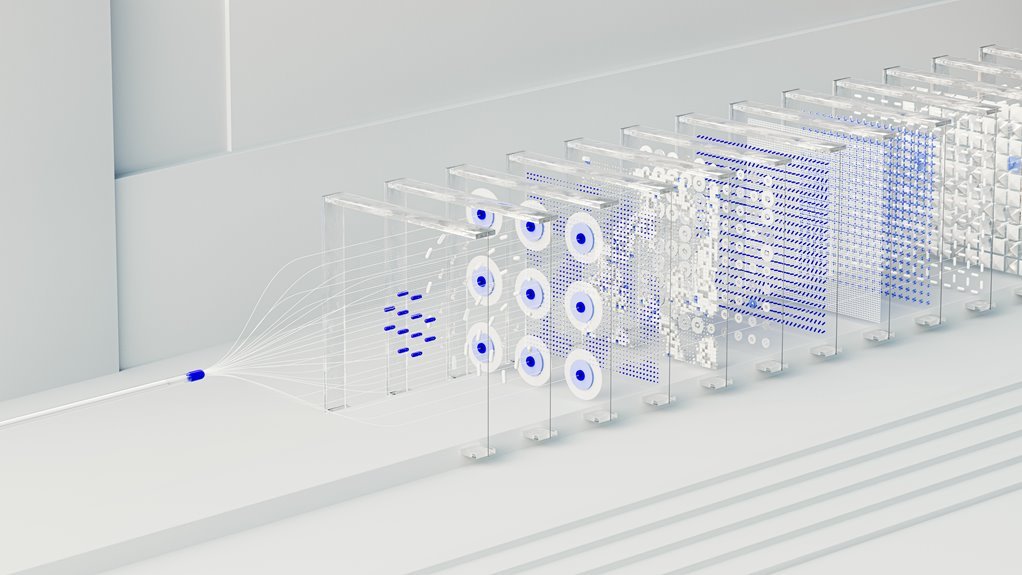
Fusion Beam 1122330027 Neural Flow presents a hybrid architecture that couples neural-processing modules with a structured dataflow framework to address real-time fusion tasks. It integrates plasma-physics-informed models with adaptive neural optimization, enabling inference, uncertainty quantification, and scalable evaluation. The approach emphasizes transparency, robust performance, and explainable pathways for plasma dynamics. While promising, its practical viability hinges on rigorous validation, robust data pipelines, and careful control-system integration to prevent performance gaps under variable conditions.
What Is Fusion Beam 1122330027 Neural Flow?
Fusion Beam 1122330027 Neural Flow refers to a computational architecture or system designated by the project code 1122330027, which integrates neural-processing modules with a cohesive dataflow framework to facilitate real-time, high-throughput computations.
The approach analyzes fusion physics phenomena and applies neural optimization to model, simulate, and optimize plasma behavior, ensuring rigorous, empirical evaluation and transparent, unconstrained inquiry into system performance.
How the Hybrid System Blends Fusion Science With Neural Architectures
The hybrid system integrates plasma-physics-informed models with neural-processing modules within a unified dataflow framework, enabling real-time inference and optimization across fusion-relevant scenarios.
It couples traditional fusion control concepts with adaptive learning, evaluating perturbations and parameter sensitivities.
Empirical results indicate robust fusion control improvements and efficient neural optimization, while preserving physical interpretability and ensuring scalable, explainable decision pathways for complex plasma dynamics.
Real-Time Data-To-Decisions: Optimizing Fusion Pulses With Learned Insight
Real-time data-to-decisions in fusion pulse optimization hinges on the seamless translation of streaming measurements into actionable control signals.
The approach combines heuristic optimization with learned insight to adapt pulse shapes under varying plasma states. Rigorous uncertainty quantification accompanies each decision, revealing confidence bounds and guiding robust pulse adjustments. Empirical results emphasize reproducibility, speed, and transparent performance benchmarks. Freedom emerges through disciplined, data-driven governance.
Challenges, Risks, and the Path to Scalable Clean Energy Deployment
What are the primary obstacles to scaling clean energy deployment, and how might these constraints be quantified and mitigated? The analysis isolates risk factors—cost volatility, grid integration, and reliability—while measuring performance through standardized metrics. Fusion stability and neural predictability emerge as core determinants, guiding investment, policy, and technology pathways toward scalable, resilient, and citizen-aligned energy systems.
Conclusion
In summary, Fusion Beam 1122330027 Neural Flow emerges as a rigorously engineered bridge between physics-informed modeling and adaptive neural optimization. Its data-driven decisions are tempered by plasma-science constraints, yielding real-time, uncertainty-aware control signals. While the system promises scalable, transparent performance, its success hinges on robust validation and careful risk management. Viewed as a fusion of compass and map, it guides complex plasma dynamics toward reliable, clean-energy horizons with disciplined, empirical progression.